


Most people don’t come into therapy saying, “I think my exile parts need space to speak.”
But instead they say, “I don’t know what’s wrong. On paper, my life is fine, the usual. But, it just doesn’t feel right.”
A life that works, but doesn’t quite feel like yours
This is often how it shows up…
Not as a crisis, but as a quiet sense of misalignment. Life looks settled enough from the outside, responsibilities are being met, things are moving forward. And yet, living inside that life feels strangely effortful, as though something essential has been left out.
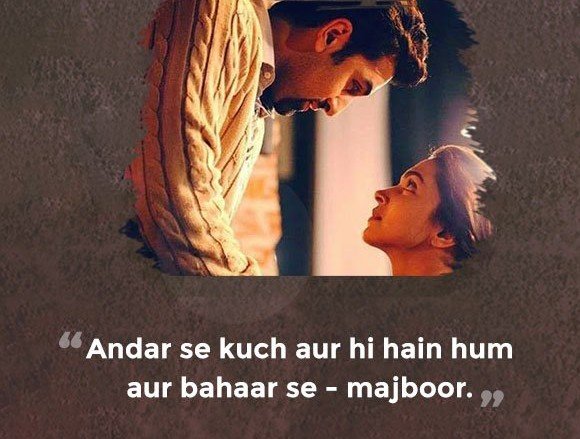
This is why Ved, the protagonist in Tamasha, stays with so many people even 11 years after its release. You see, his story does not begin with obvious trauma or failure. It begins with a life that works.
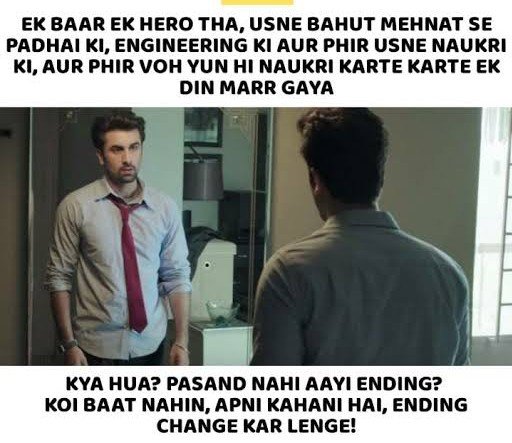
Ved follows the expected path. He performs well at his corporate job, he travels, he speaks the language of efficiency and productivity and he moves through his days in a controlled, almost mechanical way. From the outside, he appears functional and composed.
But internally, something felt muted. The vibrancy, spontaneity, and creativity that once came naturally to him as a child felt distant, almost inaccessible. This is not because they disappeared, but because they became unsafe to live with.
From an Internal Family Systems (IFS) perspective, this version of Ved was not who he truly was. It is who his system learnt he needs to become.
Exile parts: The pain that learns to go quiet
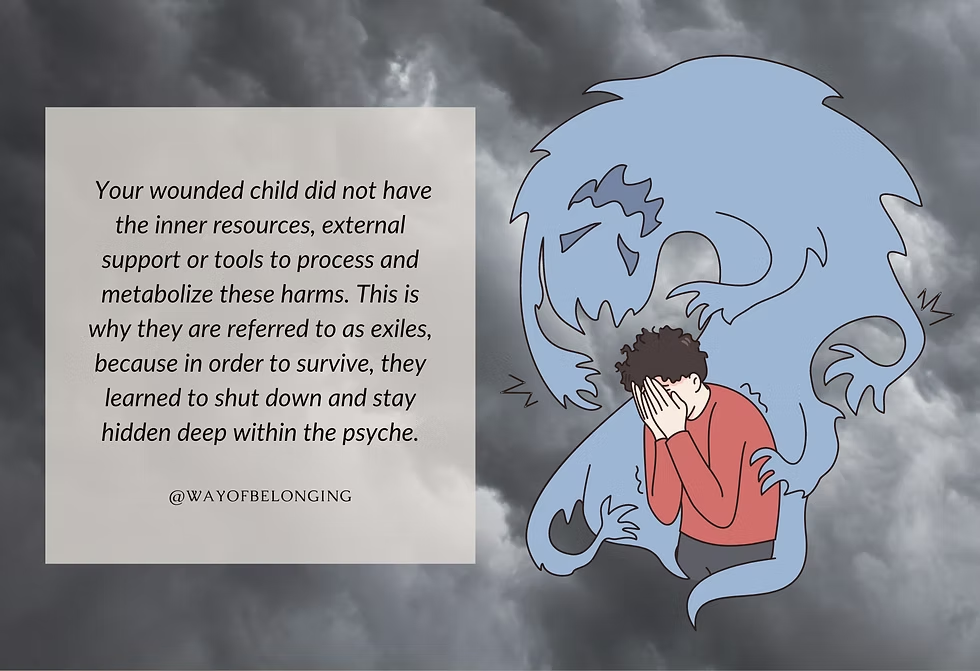
In IFS, exile parts are the parts of us that hold pain from the past. They carry emotions that were once too overwhelming, too unsafe, or too unacceptable to feel openly when they first arose. These are often early experiences, formed when we did not yet have the language, support, or safety to make sense of what we were feeling.
In many South Asian homes, children learn certain emotional rules early on.
Crying is seen as weakness.
Anger is framed as disrespect.
Needing reassurance is viewed as being too sensitive or demanding.
Love is often expressed through duty, sacrifice, and responsibility rather than emotional presence.
So when a child feels hurt, ashamed, unseen, or emotionally alone, those feelings rarely find a place to land. They are pushed away, tucked inside, or learned to be endured silently.
That pushed-away pain becomes what IFS calls an exile.
Exiles are usually young parts. They feel small, vulnerable, and easily overwhelmed. They often hold beliefs that form very early: “Something is wrong with me.” “I am too much.” “If I show who I really am, I will be rejected.”
They are not disruptive. Most of the time, they remain hidden, quietly carrying what could not be carried then.
In Ved’s story, this exile carries shame. Shame around his playfulness, dramatics, creativity, emotional expressiveness, and joy. Somewhere along the way, these qualities begin to feel unacceptable. They become associated with ridicule, disapproval, or failure.
So they go underground.
Protector parts: The life built around avoiding pain
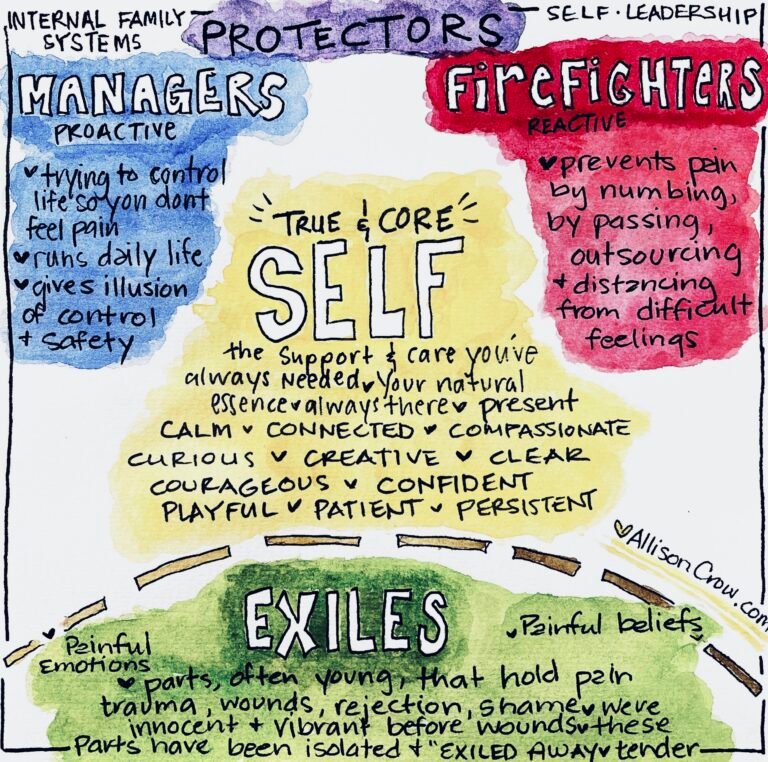
Protector parts develop around exiles.
Their job is not to heal the pain, but to make sure it is never felt again.
Protectors are strategic, alert, and often intense. They organise life around safety. Some become anxious and hypervigilant. Some become people-pleasers. Some become emotionally distant or numb. Others become driven, productive, and relentlessly focused on performance.
In Tamasha, Ved’s corporate, emotionally restrained persona is a clear protector. This part learns that conformity, structure, and emotional control bring approval and belonging. It builds a life that minimises risk by keeping vulnerability at a distance.
From the outside, this looks like maturity or responsibility. From the inside, it is pure survival.
This is where many people misunderstand themselves. The parts that feel rigid, anxious, or disconnected are often seen as the problem. But IFS see them as responses to pain, not the source of it.

The difference that changes everything
Exiles are the wound.
Protectors are the response to the wound.
Exiles hold the original pain.
Protectors organise your life around not feeling that pain again.
So when someone says, “I can’t feel my emotions,” that doesn’t mean they have an issue. It is a protector working hard to ensure that an older vulnerability or painful emotions don’t show up.
In Ved’s case, the emotional shutdown and rigid life structure are not signs of failure. They are signs of a system that learns how to survive.
A glimpse into the Self Energy in Tamasha

What makes Tamasha especially powerful through the IFS lens is that it also shows moments of what IFS calls Self-energy.
Self is not another part. It is a state of being marked by qualities like curiosity, calmness, creativity, compassion, and clarity.
In the early scenes set in Corsica, Ved appears playful, expressive, imaginative, and alive. He tells stories, acts out characters, connects spontaneously.
This is not an exile and not a protector. This is Ved in Self-energy.
But when he goes back to his everyday life, his system feels unsafe again. The “Vacation Ved” becomes compartmentalised. It exists temporarily, rather than as a way of living.
When Ved later rejects Tara, it is not because he lacks feeling or care. It is because his protectors are terrified. Terrified that intimacy and authenticity will expose the shame his exile has been carrying for years.
The rejection is not cruelty but fear.
Why protectors do not relax when we try to fix ourselves
Many people come to therapy wanting to get rid of their protectors. They want to stop being anxious, stop overthinking, stop shutting down, stop feeling angry or numb.
But protectors do not step aside because we demand it. They step aside when they trust that the exiles they are protecting will finally be met with care.
This is why simply pushing Ved to “be expressive” or “follow his passion” would not have worked. Without safety, creativity feels dangerous. Intimacy feels exposing.
IFS says, protectors are not fought or silenced but they are listened to. Curiosity replaces control and over time, as exiles feel seen and supported, protectors no longer have to work as hard.
They soften.
They rest.
Healing, from an IFS perspective, is not about dismantling the life you have built.
It is about understanding why it was built in the first place.
In Tamasha, Ved does not heal by rejecting responsibility or structure. He heals by allowing his expression, basically his Self-energy to lead again. His creativity, playfulness, and emotional honesty are no longer exiled. They are integrated.
The protectors do not disappear but they stop driving the system alone.
Let's take a gentle pause
If you recognise yourself in Ved’s story, there is nothing wrong with you. The parts of you that learned to stay controlled, productive, or emotionally distant do so to protect something tender.
This work is not about becoming less responsible or less devoted. It is about allowing care to finally reach the parts of you that have been waiting quietly for a long time.
Sometimes the most important question is not, “How do I fix this?”
It is, “What part of me has been protecting something vulnerable, and what might it need now?”
Hi, I’m Sakshi, a trauma-informed psychotherapist and Certified Level-2 IFS Therapist. I write about the inner systems we develop to survive, belong, and stay connected, particularly within South Asian cultural contexts, through the lens of Internal Family Systems therapy. The reflections shared here are drawn from recurring themes in my clinical work along with personal observation. Any examples are composite and not based on a single individual.