


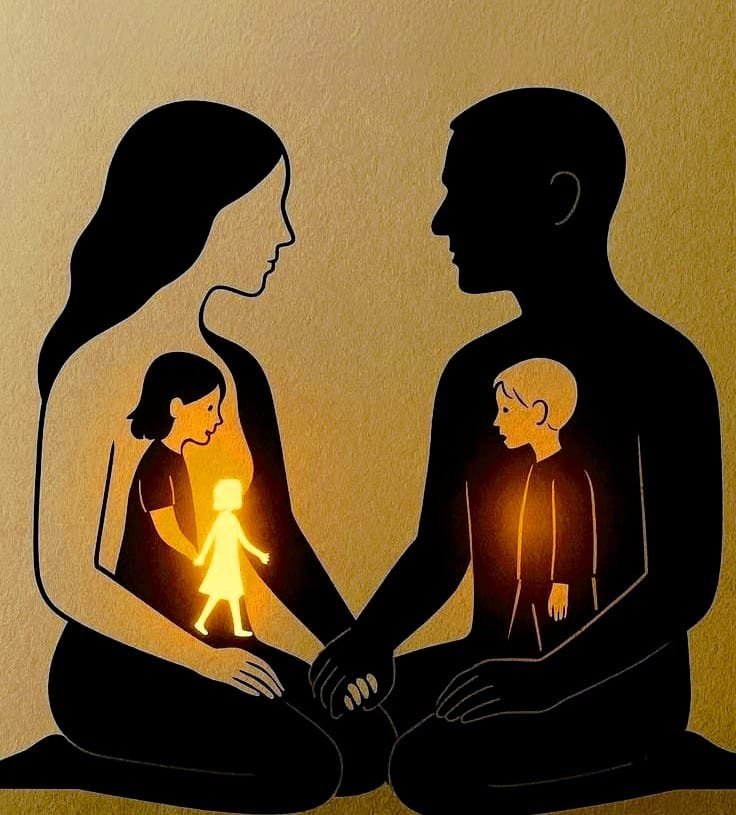
Most couples I meet in sessions don’t come to therapy because they don’t love each other. It’s rarely ever that.
They come because some patterns keep repeating…arguments that escalate too fast, distance that feels sudden and confusing, moments where one person reaches out and the other shuts down. Over time, both start to feel misunderstood, blamed, or alone, even while sitting right next to each other.
And that’s exactly what happened in a recent interaction.
Last week, a couple came in and said, “We don’t have big issues. We just keep clashing over small things every single day.”
And the way they spoke was a common dynamic I sense. One partner was already explaining, justifying, trying to make things better. The other sat back, quiet, tired, clearly done with the conversation before it even began.
One person reaches out harder when they feel the distance.
The other pulls away because conflict has never felt safe.
On the surface, it looks like poor communication but underneath, it’s something else entirely. Afterall, it wasn’t really about the dishes, the parents, or who said what. It about something else…
This is where Internal Family Systems and specifically the Intimacy From the Inside Out (IFIO), which is an attachment focused branch of IFS offers a very different way of understanding relationship conflict.
One that shifts the focus away from blame, communication hacks, or personality differences, and toward the inner systems that show up between two people.
Relationships don’t happen between two people
They happen between two inner systems!!!
From the IFIO lens, we don’t ask, “Who is right?” or “Who needs to change?” or “Who started it”.
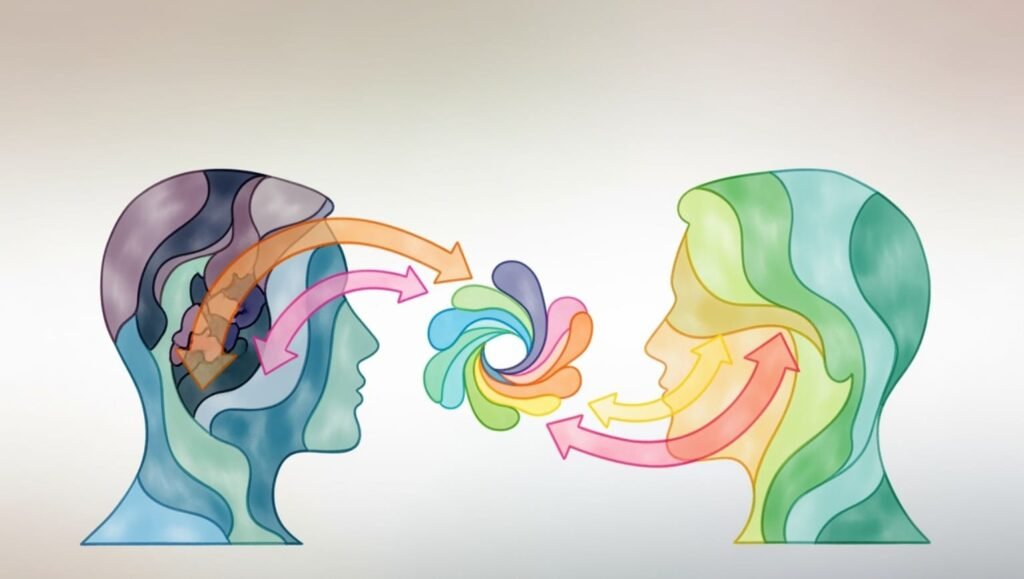
Instead, we pay attention to how parts of one person interact with parts of the other, often automatically and at great speed, especially in moments of perceived threat or disconnection.
A partner who explains, fixes, or pushes for resolution is often being led by a part that learned early on that effort, engagement, or vigilance is how closeness is maintained. A partner who goes quiet, withdraws, or shuts down may be guided by a protector that learned, often through experience, that conflict, intensity, or emotional exposure is dangerous.
On the surface, this looks like incompatibility but underneath, it’s protection meeting protection. And because both systems are trying to stay safe in different ways, they end up repeatedly triggering each other.
What makes IFIO or IFS couple work different from traditional couple therapy
IFIO is built on a simple but powerful premise:
Intimacy doesn’t break down because partners lack skills. It breaks down because protectors take over when vulnerability doesn’t feel safe.
Rather than asking couples to communicate better while they’re already dysregulated, IFIO slows the interaction down and helps each partner recognise who inside them is speaking at that moment.
Many couples say, “We understand each other. We know where this comes from. But it still keeps happening.”
And IFIO explains it really well!!
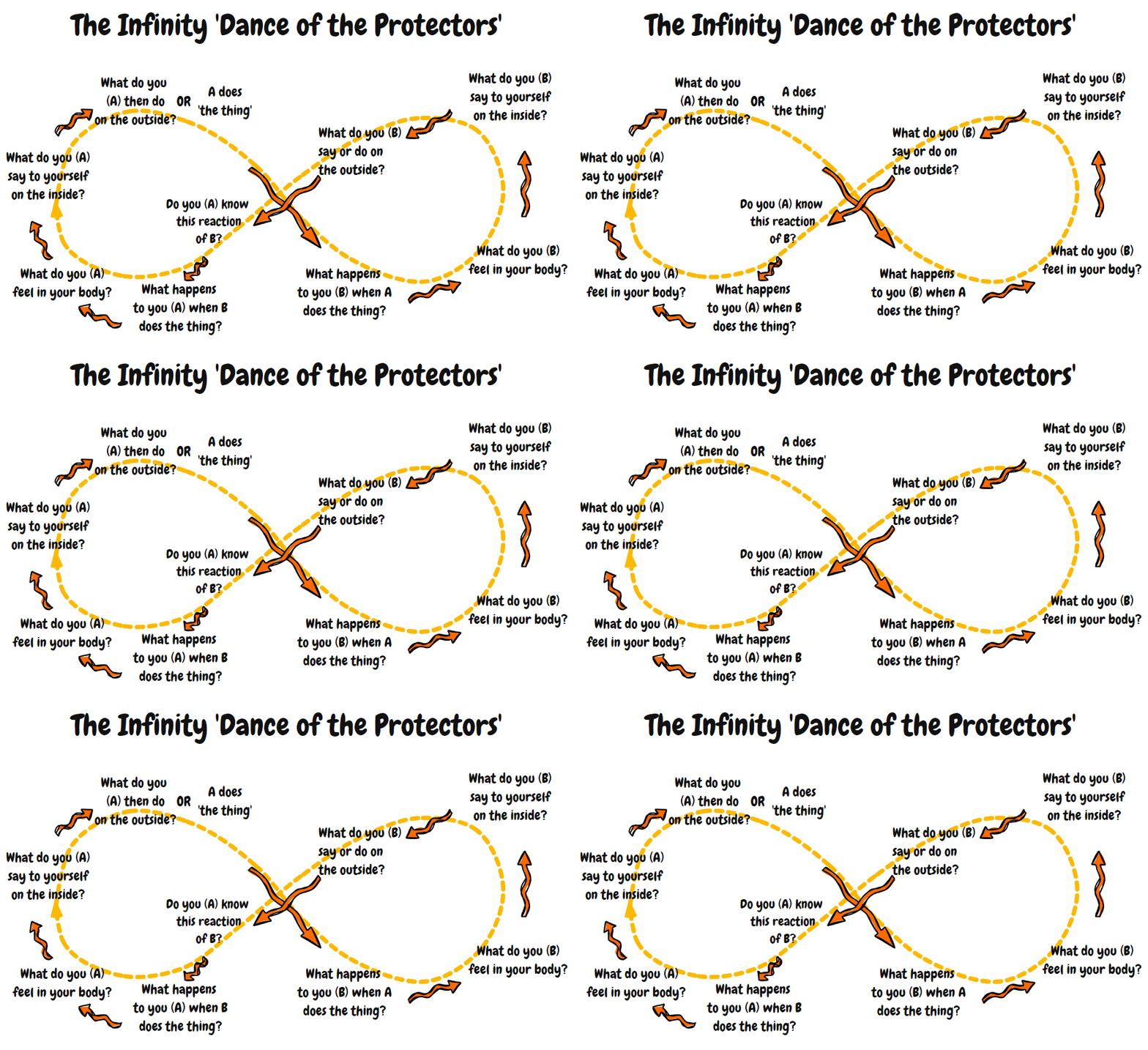
It says when protector parts within us take charge, patterns do keep on repeating inspite of all the understanding. So even though the mind knows, the nervous system is already activated. They are not conscious choices, They are well-rehearsed protective loops between two attachment systems.
Unlike other traditional therapy, IFS framework for couples, doesn’t push couples into emotional exposure or vulnerability. rather, it respects the protectors that show up as anger, criticism, withdrawal, silence, or logic, recognise them not as obstacles or “failures” to intimacy, but as strategies that once made sense.
What IFS couples work often looks like in the therapy room
I often notice what mainly unfolds in the room is surprisingly ordinary.
Where one partner leans forward…explaining, clarifying, trying to fix.
The other leans back…tired, guarded, emotionally done before the conversation really begins.
The topic might be dishes, parents, tone, timing. But the intensity doesn’t match the issue.
In those moments IFS invites us to pause the interaction and gently explore what happens inside each partner just before the reaction.
For one person, distance activates a part that says- “If I don’t push now, I’ll be abandoned.”
For the other, intensity wakes up a part that says- “This feels unsafe. I need to shut this down.”
Both are convinced the other is the problem.
But the real threat to their intimacy is not conflict…
it’s unprotected vulnerability
IFIO understands that underneath protectors live parts carrying older emotional pain… moments of rejection, abandonment, shame, or not being safe to need.
In intimate relationships, these parts are easily activated.
A delayed message can stir an old fear of being forgotten.
A raised voice can touch a memory of criticism or danger.
A partner pulling away can echo an earlier experience of being left alone.
IFIO sessions help couples recognise that many reactions are less about the present moment and more about past relational wounds being touched without enough safety.
This doesn’t excuse harmful behaviour…But it does help couples understand why reactions feel so fast, so intense, and so hard to control.
From Reactivity to Relationship
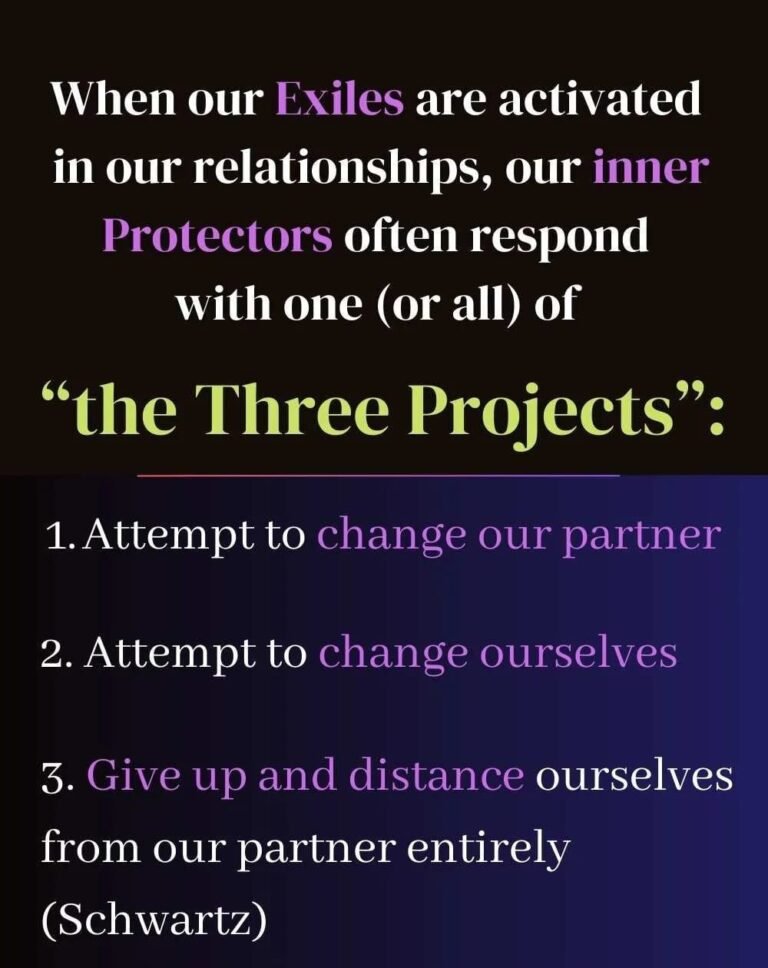
One of the most powerful moments I see in Couples work from the IFIO lens is when a partner can speak from ‘Self’ about what’s happening underneath their reaction.
Like: “something in me is reacting hard right now. It’s scared to lose its freedom.”
This is the breakthrough. A point where the scene shifts, not because the issue is resolved. But because the “intention” beneath the reaction finally becomes visible.
Over time, couples learn to:
- Notice when they’re speaking from a part rather than Self
- Pause before reacting
- Stay present with their own internal part responses while listening. Slowly, the familiar loop becomes clearer.
And the cycle itself becomes the problem…not either partner.
And the intimacy then comes not through awareness…but from safety
Many couples believe intimacy means more talking, more time together, or resolving disagreements quickly. But IFIO offers a different understanding that-
Intimacy grows when parts no longer feel they have to stay on high alert.
When protectors trust they won’t be blamed or overridden.
When moments of Self energy are possible even in the middle of tension.
This is why IFIO is called Intimacy From the Inside Out.
Change doesn’t begin with behaviour. It begins with internal and relational safety.

It's especially relevant in South Asian and collectivist contexts
In many collectivist cultures, partners bring additional layers into the room. Expectations around adjustment, pressure to balance, silence around needs, loyalty to family systems, blurriness in boundaries and expectation to keep things together and only break down in private.
The familiar “log kya kahenge” (what society will say) pattern adds another layer. It teaches parts of us early on that being seen in struggle can invite judgment, shame, or loss of belonging. As a result, intimacy becomes more complicated. Vulnerability may feel risky, not just personally, but socially.
From an IFS lens, this often means protectors work overtime (managing appearances, suppressing needs, and containing conflict) even within close relationships.
Afterall, more than two systems are at play here.
The cost is that partners feel connected on the surface, but emotionally alone underneath.
Here IFS couple work helps bring these invisible pressures into awareness, so intimacy can begin to feel safer, not just between two people, but within the larger cultural context they’re navigating. What IFIO ultimately offers couples is not a way to merely resolve conflict or improve communication, but a way to understand it differently.
When partners can recognise that what’s playing out between them is not a character flaw or a lack of effort, but two protection systems responding to vulnerability, the struggle begins to shift.
The pace slows, the room softens and there’s more space to pause instead of react.
Intimacy, from this lens, isn’t something you force through better conversations or resolve through logic. It emerges when parts no longer feel they have to stay on guard and when protectors trust that they will be listened to, not blamed or overridden.
For many couples, especially those navigating layered cultural expectations, this shift can feel profound.
It’s when the cycle becomes visible, it no longer has to run the relationship.
And in the space between awareness and safety, connection has a chance to return, not as effort, but as relief.

Hi! I’m Sakshi J Danwwar, a Trauma-Focused Psychotherapist and a Certified Level-2 Internal Family Systems Therapist, Trainer and Supervisor. I work with individuals, couples and therapists to support deeper self-leadership in both life and practice. I write about the inner systems we develop to survive, belong, and stay connected, particularly within South Asian cultural contexts, through the lens of Internal Family Systems therapy. The reflections shared here are drawn from recurring themes in my clinical work along with personal observation. Any examples are composite and not based on a single individual.